Viktoria-Luise-Platz
Berlin's Most Refined Culinary Square Where Kaisers Once Lived

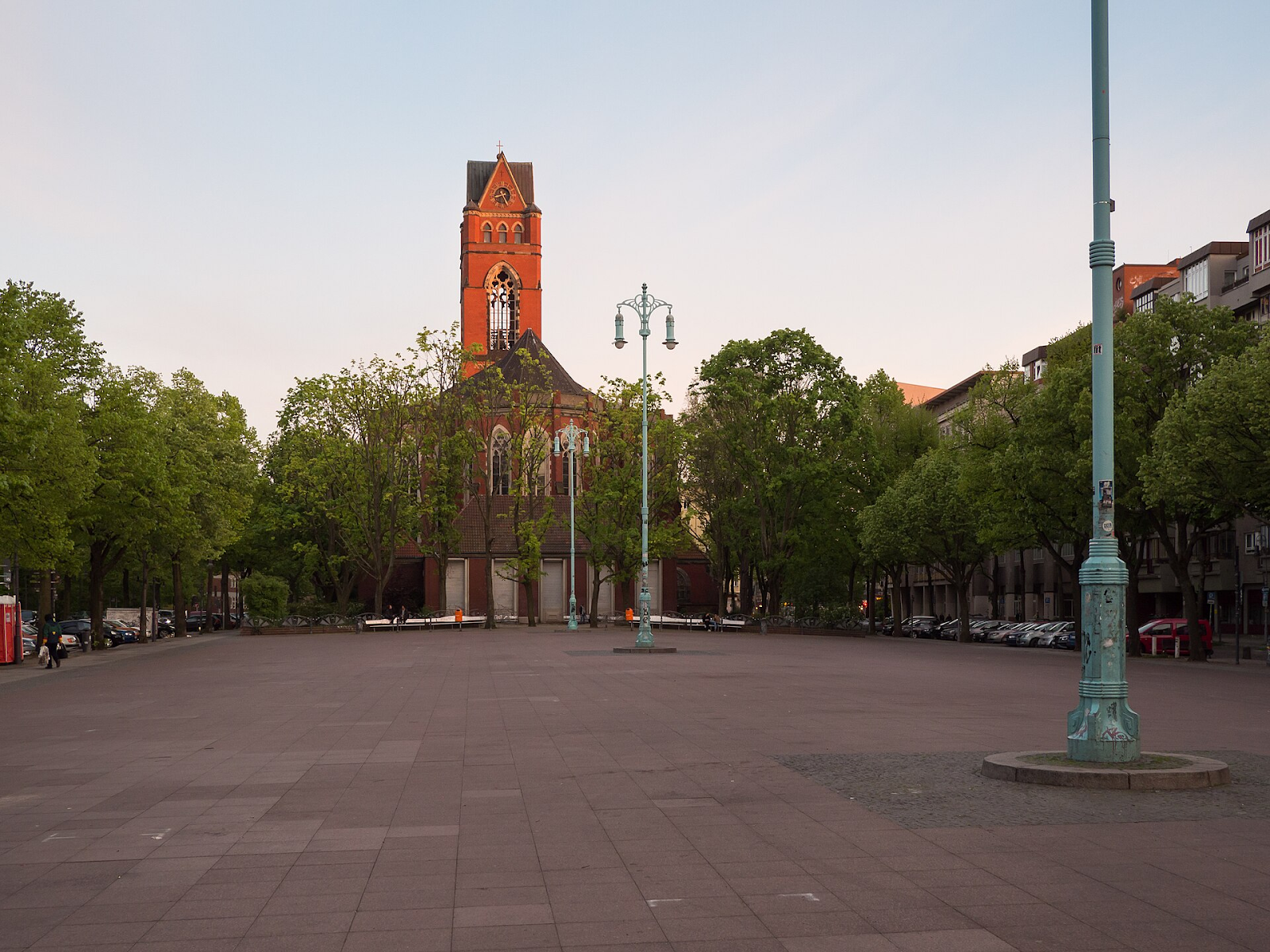
Step off the U4 at Viktoria-Luise-Platz, and you'll find yourself in what feels like Berlin's best-kept secret—a hexagonal oasis of Gründerzeit elegance. This is a place where the central fountain doubles as an outdoor bathtub for joyful children and dogs in the summer, where cinematic legend Billy Wilder lived in the 1920s, and where some of the city's most authentic Austrian schnitzel is served just steps from a historic design school that has been empowering creative minds for over 150 years.
Unlike the tourist-packed squares of Mitte, Viktoria-Luise-Platz operates on a distinct neighborhood rhythm. Here, young creatives from the neighboring Lette-Verein design school enjoy their coffee breaks at sidewalk cafes, while elderly Berliners claim the same fountain-side benches they've occupied for decades. The square feels like a meticulously crafted film set designed to showcase "how cultured Europeans live"—except it's completely real, and the coffee is phenomenal.
Where Austrian Emperors Meet Russian Breakfasts at Berlin's Most Civilized Fountain
The square's dining scene reads like a love letter to Old Europe, anchored by Sissi, a pink-wallpapered Austrian restaurant that has rightfully been voted Berlin's best Austrian eatery for years. In the welcoming dining room of Restaurant Sissi—adorned with stylish wooden furniture and floral wallpaper—you can indulge in the memory of the former Austrian Empress Sissi while experiencing a true culinary revelation.
The Wiener Schnitzel here isn't just food; it's theater. It is always perfectly executed: crispy on the outside and wonderfully tender on the inside, exactly as tradition dictates. Be sure to save room for the Kaiserschmarrn, that gloriously messy Austrian shredded pancake that practically melts on the tongue. For the perfect sweet finale to your imperial feast, try the restaurant's signature Sissi Cake—a house creation featuring luscious cassis and mocha truffles.
Just steps away, Potemkin offers a completely different, yet equally enchanting, emotional palette. Conceived as an ode to the silent film Battleship Potemkin, this Russian establishment serves some of Berlin's most soul-warming breakfasts. Their massive, delicious breakfast spreads, particularly the famous Eisenstein for two, are local legends. A plate of blinis with salmon caviar and crème fraîche transforms a simple morning meal into an indulgent ritual, while their authentic borscht—prepared with premium Argentine Black Angus beef hip—provides rich comfort that transcends the seasons.
New Montevideo occupies prime real estate directly on the square and represents the international soul that makes Berlin tick. A highly popular brunch destination, people gather here into the late afternoon to enjoy a vast menu that spans culinary delights from around the world. The restaurant's terrace offers front-row seats to the square's daily theater: watch design students sketch architectural details, see neighbors walking perfectly groomed dogs, and observe the eternal chess matches between elderly men who have claimed the same benches for decades.
For those seeking an elevated coffee experience, Jules Geisberg operates from a former neighborhood post office. Above its doors hangs a life-size statue that seems to wonder where all the postmen have gone. The interior design is minimalist with elegant marble details, perfectly complementing the warmth and friendliness of the team. Featuring beans from roasters like North Star and Vote, their specialty coffee program represents Berlin's third-wave coffee culture at its most refined.
The Design School Shaping Berlin's Creative DNA for Over 150 Years
What sets Viktoria-Luise-Platz apart from other Berlin squares isn't just the superb dining—it's the palpable creative energy radiating from the imposing building at number 6. The Lette-Verein was founded in 1866 by Dr. Wilhelm Adolf Lette as an "Association for the Promotion of Women's Earning Capacity." Initially a technical school for girls, it represents one of Europe's most progressive educational experiments.
The institution boldly pioneered vocational education for women at a time when such opportunities were virtually nonexistent. The beautiful building at Viktoria-Luise-Platz 6 was constructed between 1901 and 1902. Originally, its design featured several courtyards clustered around the main structure, giving the ensemble the impressive appearance of a honeycomb from the air.
Today, the Lette-Verein continues to train creative professionals in fashion design, photography, media technology, and other forward-thinking fields. Their vocational fashion design program places a strong focus on bridging skills in illustration, design, and professional garment manufacturing. Walking past during the day, you'll spot impeccably dressed students carrying portfolios and sketching in the square's gardens—tomorrow's creative leaders honing their craft in the very institution that has been quietly revolutionizing Berlin's cultural landscape for over a century.
A Neighborhood Where Imperial History Meets Everyday Berlin Life
The square traces its origins back to 1900 and is named after Princess Viktoria Luise of Prussia (1892–1980), the daughter of Kaiser Wilhelm II and the great-granddaughter of Queen Victoria. This regal legacy feels less like ancient history and more like living heritage when you're sitting at a cafe terrace watching the fountain operate exactly as Fritz Encke designed it, under the tranquil motto "Ruhe" (Peace).
The architectural preservation here tells Berlin's story in three dimensions. Around the square, where the namesake princess is said to have lived for a time, many elegant and richly decorated Gründerzeit-era houses have been beautifully preserved. These historic buildings survived two world wars and the Cold War division, ultimately creating today's remarkable and resilient streetscape.
The neighborhood's creative lineage runs incredibly deep. Filmmaker Billy Wilder lived here in the 1920s, as did the acclaimed Italian composer Ferruccio Busoni—both at number 11. These weren't coincidental residential choices. In the 1920s, Schöneberg represented Berlin's most sophisticated neighborhood; the area around the square was the preferred home of wealthy emigrants, artists, and prominent scientists.
Just a five-minute walk connects you to Nollendorfplatz, the historic ground zero for Berlin's vibrant LGBTQ+ culture and nightlife. Yet Viktoria-Luise-Platz stubbornly maintains its refined residential character. When the weather is right, everyone seems to venture out to soak up the sun. And truly, there is no quieter, more serene spot than the gardens of the Lette-Verein at number 6, where generations of young people have learned their trade.
The Unwritten Rules for Savoring Berlin's Most Elegant Square
Timing matters at Viktoria-Luise-Platz, though the rhythms differ significantly from Berlin's more tourist-heavy neighborhoods. A morning coffee at Jules Geisberg (8:30–10:00 AM) allows you to observe the design students' pre-class rituals. The Austrian restaurants hit their lively stride during traditional Viennese coffee house hours (2:00–6:00 PM), providing the perfect window to appreciate a leisurely Kaiserschmarrn and watch the square's fascinating social dynamics unfold.
Summer transforms the majestic fountain into a splash pool for neighborhood children and dogs, while winter brings a cozy, romantic intimacy to the square's indoor spaces. Regardless of the season, the square securely maintains its status as one of the most beautiful places in Berlin. It's a judgment that feels undeniably validated as you sink into a terrace chair with an authentic Austrian coffee and watch this perfect synthesis of imperial grandeur and contemporary creativity operate with absolute precision.
For travelers seeking a side of Berlin beyond the usual guidebook clichés, Viktoria-Luise-Platz offers something genuinely precious: a window into how sophisticated urban life can function when history, education, and excellent food converge in a space beautifully designed for human flourishing. Just remember to bring your patience to match the proper, relaxed Austrian breakfast pace—here, rushing completely defeats the point.
Viktoria-Luise-Platz
Viktoria-Luise-Platz, Motzstraße, 10777 Berlin, Germany
View on Google Maps ↗

Comments
Post a Comment