Saturday mornings at Winterfeldtplatz
Berlin's Most Authentic Food Market Experience
The very first time you smell grilled mackerel beautifully mingling with fresh-baked strudel at 10:00 AM on a crisp Saturday morning, you'll instantly understand why Berliners have been magnetically drawn to the Winterfeldtplatz market for over a century. While tourists pack tightly into Markthalle Neun fighting for the perfect Instagram-worthy shots, true locals are here filling their wicker baskets with wild-foraged mushrooms, artisanal marmalades, and vibrant produce that tastes like it was plucked straight from Brandenburg soil that very morning—because it probably was.
This isn't just another generic European farmers market. Winterfeldtplatz proudly represents something increasingly rare in modern cities: a genuine, thriving neighborhood institution. It's a place where elegant Schöneberg matrons expertly haggle over organic white asparagus right alongside Turkish families buying massive bunches of herbs for weekend feasts. It's where the famous fish griller knows his regulars by name, and where you can still happily pay €2 for a sizzling currywurst that easily rivals any trendy food hall version costing triple the price.
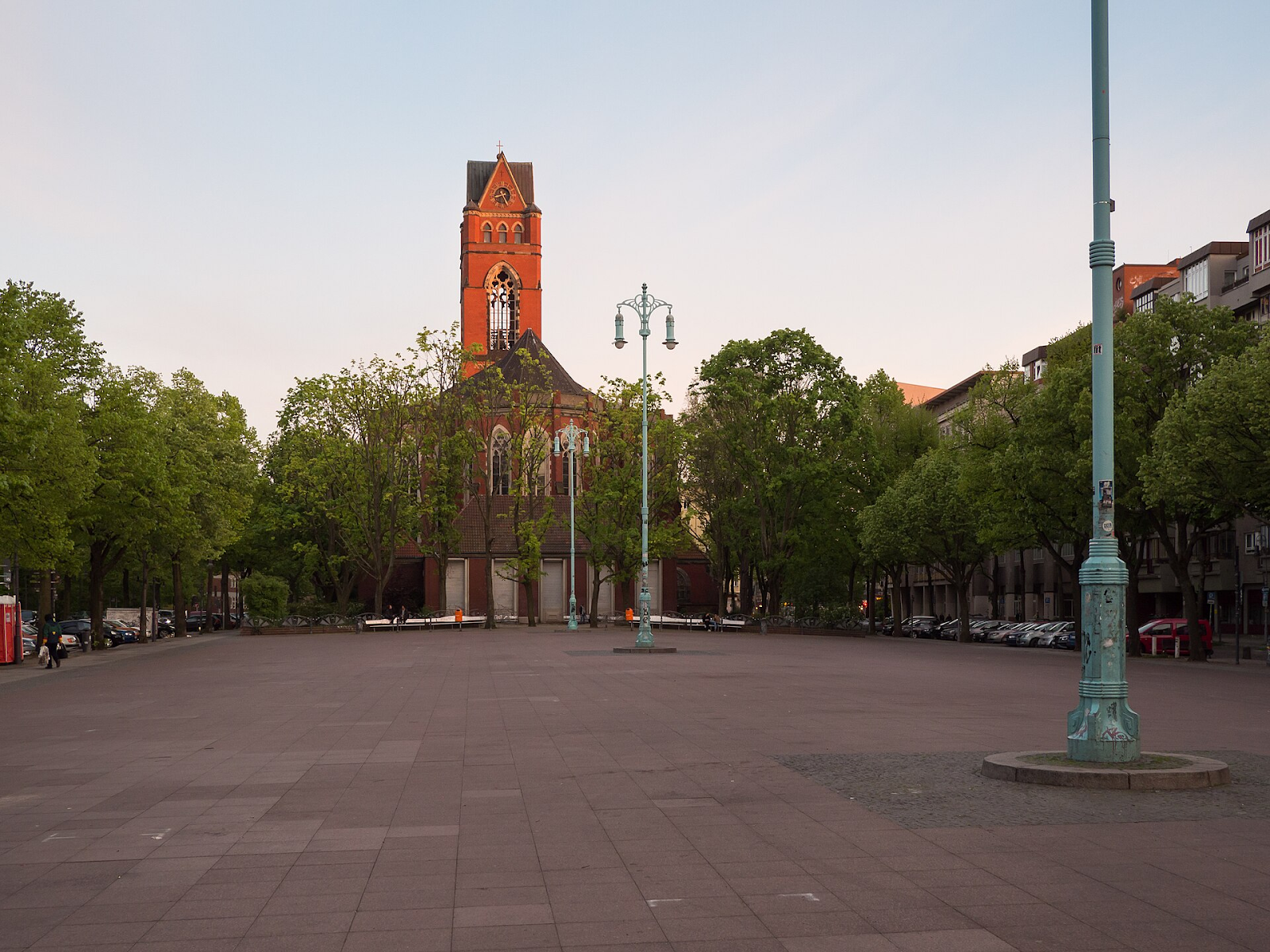
The Red-Brick Church Signals You've Arrived at Berlin's Real Saturday Scene
Navigate past the vibrant rainbow-lit pillars at the Nollendorfplatz U-Bahn station—a fitting nod to Schöneberg's rich, pioneering LGBTQ+ history—and simply follow the crowds of locals confidently wheeling their shopping trolleys down the tree-lined streets. When the imposing neo-Gothic spire of St. Matthias Church suddenly appears above the rooftops, you'll know you've found your destination. This stunning red-brick landmark, which was rebuilt in a simplified form after heavy WWII bombing, anchors the southern edge of a massive square that magically transforms each Saturday into Berlin's largest and most incredibly diverse weekly market, hosting over 250 unique vendors from 8:00 AM to 4:00 PM.
The market's deep roots stretch all the way back to 1890 when fruit sellers first began gathering on what was then simply called "Platz C." The modern incarnation of the market began much more humbly in 1990 with just a handful of dedicated stalls. Today, arriving before 10:00 AM generously rewards you with the first pick of highly sought-after foraged chanterelles and the serene chance to watch the square slowly transform from a sleepy neighborhood plaza into the buzzing epicenter of Berlin food culture. By noon, the narrow aisles between the colorful stalls swell into rivers of humanity—a truly fascinating cross-section of contemporary Berlin that includes everyone from award-winning novelists and bustling immigrant families to the last lingering remnants of old West Berlin high society.
Where Swedish Chocolate Meets Brazilian Street Food in the Heart of Old West Berlin
Forget the predictable, standard bratwurst stands (though Bauer Lindner's spectacular organic Brandenburg sausages absolutely deserve their devoted following). Winterfeldtplatz's sprawling food offerings read like a passionate love letter to Berlin's international soul. Jürgen's Stecklerfisch stand reliably draws the longest queues, where hungry locals wait patiently for perfectly grilled pike and char sourced from Bavaria's Ammersee, generously slathered with his legendary, closely guarded herb remoulade. The man has truly elevated simple grilled fish to an art form—and the weekend ritual of joining his queue has become as essential to many Berliners as their morning cup of coffee.
But the market's true genius lies in its entirely unexpected culinary juxtapositions. Where else on earth would you find La Praline's exquisite Swedish truffles (you must try the sea salt or mocca varieties) sold just steps away from a lively Brazilian imbiss dishing out highly authentic feijoada and those dangerously addictive pão de queijo cheese balls? The Brazilian stand remains one of the very few places in all of Berlin serving fresh caju fruit, while just nearby, the Wiener Strudel-Manufaktur tempts passersby with warm Topfenstrudel mit Marillen—a divine quark strudel with apricots that would make any Viennese grandmother immensely proud.
For the adventurous eater, be sure to seek out the Russian pelmeni dumplings (a massive rarity at Berlin street markets), perfectly hand-cut pommes frites that put any upscale gastropub version to shame, or a massive plate of Kaiserschmarren—that gloriously messy, sugar-dusted Austrian shredded pancake that functions equally well as a decadent breakfast or a heavy dessert. Even the ubiquitous Turkish gözleme here significantly stands out from the crowd, featuring complex fillings that go far beyond the standard spinach-and-feta combinations found elsewhere in the city.
A Neighborhood That Wears Its History on Its Sleeve (and in Its Architecture)
Truly understanding the magic of Winterfeldtplatz requires zooming out to appreciate Schöneberg's highly unique position in Berlin's cultural geography. This neighborhood was the undisputed ground zero for Europe's most vibrant LGBTQ+ scene in the roaring 1920s. It was here that writer Christopher Isherwood prowled the legendary Eldorado cabaret, and iconic star Marlene Dietrich held court in smoky, glamorous bars. Today, the rainbow-colored U-Bahn station and the massive annual Lesbian-Gay City Festival (which regularly draws 400,000+ visitors) joyfully honor that profound legacy while cementing the area's continued, vital relevance to queer culture worldwide.
The neighborhood's stunning architecture tells its own fascinating story of survival, destruction, and reinvention. Where the grand Wilhelminian townhouses miraculously survived the war, you'll easily spot highly ornate, original stucco flourishes and elegant wrought-iron balconies. The jarring architectural gaps between them—quickly filled with highly pragmatic 1960s social housing blocks—serve as sobering, ever-present reminders of war-time destruction and Cold War division. Yet, somehow, this chaotic patchwork works perfectly, creating a deeply lived-in authenticity that rampant gentrification hasn't yet managed to sanitize into boring homogeneity.
After happily loading up your bags with market goods, take time to explore the beautiful surrounding streets that feel perfectly frozen between a bohemian past and a bourgeois present. Winterfeldt Schokoladen occupies a truly gorgeous Gründerzeit-era pharmacy building right on Goltzstraße; its stunning vintage wooden fixtures now proudly display artisanal chocolates instead of medicinal compounds. Duck into L'Epicerie on Frankenstraße to browse an immaculate selection of French specialties, or claim a highly coveted window seat at Impala Coffee on Maaßenstraße—their excellent house-roasted beans pair perfectly with your market-fresh pastries while you sit back and watch the bustling Saturday crowd ebb and flow.
The Unwritten Rules That Separate Visitors from Regulars
Timing is absolutely everything at Winterfeldtplatz. While the market officially opens at 7:00 AM, the undisputed sweet spot hits exactly between 9:00 and 10:00 AM—early enough to snag the absolute best, unpicked produce, but late enough that the vendors have settled comfortably into their rhythm and their morning espresso has finally kicked in. By 10:30 AM, you'll be swimming hard upstream against serious shoppers wielding their wheeled carts like dangerous battering rams. The initiated firmly know to arrive early, or conversely, to embrace the famous 3:00 PM flower discount hour, when vendors dramatically slash prices on gorgeous bouquets rather than hauling their unsold blooms back to their trucks.
Cash firmly reigns supreme here—stuff your pockets with small bills and €2 coins and leave the credit cards at home. While a few forward-thinking vendors have embraced modern payment methods, frantically fumbling for your phone or card at the busy cheese stand while a queue of highly impatient Berliners builds behind you marks you as irredeemably touristy. A basic, cheerful "Guten Morgen" and "Danke schön" go incredibly far, though many vendors speak perfect English. The universal language of pointing enthusiastically and smiling easily transcends any linguistic barriers.
Unlike highly sanitized, seasonal tourist markets, Winterfeldtplatz proudly operates in "fast jeden Wetter"—almost any weather. Devoted locals heavily bundle up in the dead of winter for their weekly shopping ritual, snow and freezing rain be damned. The Brazilian stand's rich hot chocolate and the Austrian baker's steaming strudel provide crucial internal heating on those frigid December Saturdays, while summer finally brings out the wildly popular ice cream vendors and beautifully transforms the surrounding café terraces into prime, sun-drenched people-watching perches.
Why Winterfeldtplatz Matters in an Amazon Prime World
In an increasingly digital era dominated by sterile meal kits and instant grocery delivery apps, Winterfeldtplatz's continued, explosive vitality feels almost radical. This isn't mere quaint nostalgia or artificial tourist theater—it is a deeply vital, functioning piece of urban infrastructure where actual neighbors run into each other, vendors intimately remember your family's preferences, and the food retains a visceral connection to place and season. The wild herbs and dirt-caked foraged mushrooms you'll find here simply don't exist in any supermarket algorithm.
For travelers seeking truly authentic local experiences, Winterfeldtplatz offers something increasingly precious in modern Europe: a crystal-clear window into how real Berliners actually live, shop, eat, and socialize when they're not performing for tourist cameras. Yes, you will inevitably spot other visitors tightly clutching guidebooks. But you will be vastly outnumbered by real locals doing their serious weekly shopping, meeting old friends for a boisterous market breakfast, or simply soaking in the wonderful, controlled chaos that makes Berlin's historic neighborhoods so addictively livable.
Skip the hyped, overcrowded food halls and the manufactured Instagram-bait markets. Instead, join the weekly Saturday morning pilgrimage to Winterfeldtplatz, where delicate Swedish chocolate peacefully coexists with hearty Swabian Maultaschen, where the fish griller's long queue serves as a bustling, informal community center, and where Berlin's past, present, and future all beautifully converge over the simple, timeless act of buying really good tomatoes. Just remember to bring cash—and a massive appetite for both the incredible food and the beautifully messy authenticity of real neighborhood life.


Comments
Post a Comment